
Uncover the ‘Why’ behind operational problems
Find the component that actually failed, and find it before someone has opened three consoles looking for it.
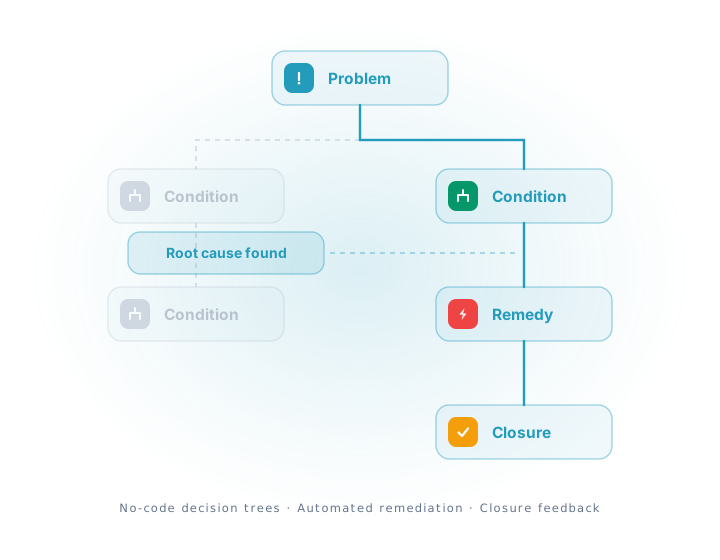
Intuitive decision tree design interface
Configure multiple RCA flows or decision trees within Sherlock with an intuitive no-code interface and automate the root cause analysis process as soon as the anomalies are detected.
Sherlock provides the flexibility and simplicity to configure even the most intricate of decision trees so that it can provide the exact root cause behind the anomalies and issues.
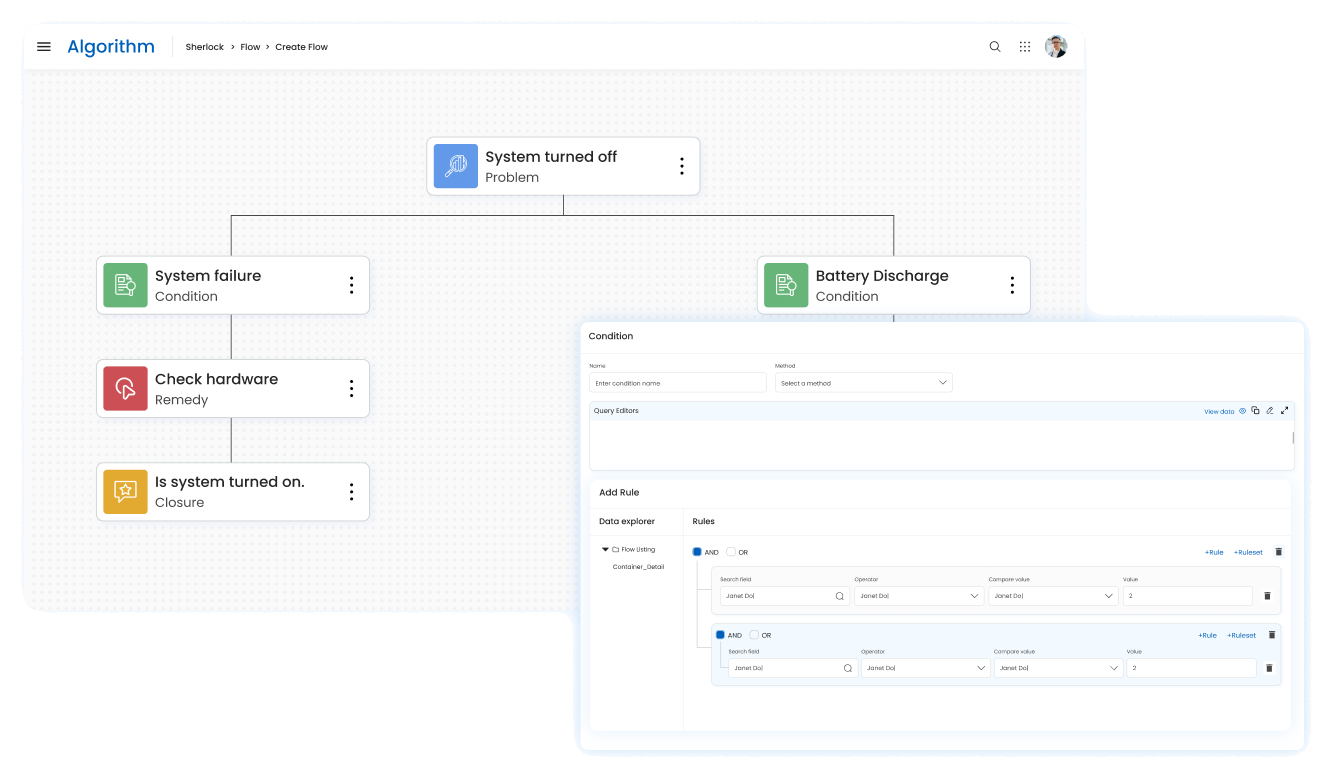
Sherlock: Autonomous Problem Detection to Closure
See how Sherlock detects operational failures, builds a fault tree, executes the right remediation, and verifies recovery before closing the case.
Swift issue identification
When something fails, the expensive part is rarely the fix. It is the forty minutes spent working out which of six systems went wrong first.
Sherlock walks the decision tree you configured, isolates the failing component, and hands the on-call engineer a cause rather than a symptom.
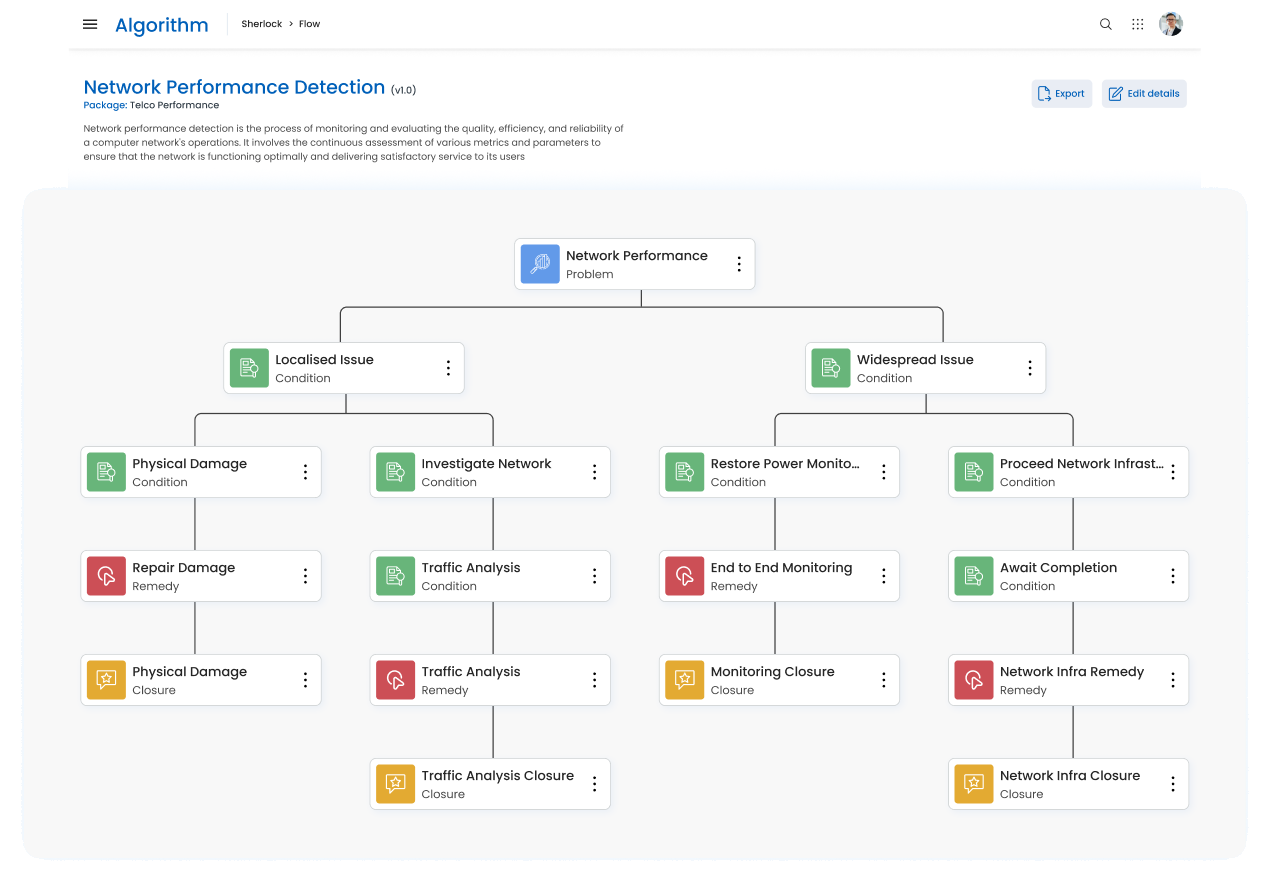
Configurable remediation actions
When it comes to resolving operational problems, Sherlock doesn't stop at identifying root causes. Users can configure remediation actions that can be triggered as soon as the root cause of an issue is identified.
Sherlock can trigger multiple type of actions such as triggering an advanced ETL pipeline, calling a REST or data API and execute scripts at scale with ProcBot.
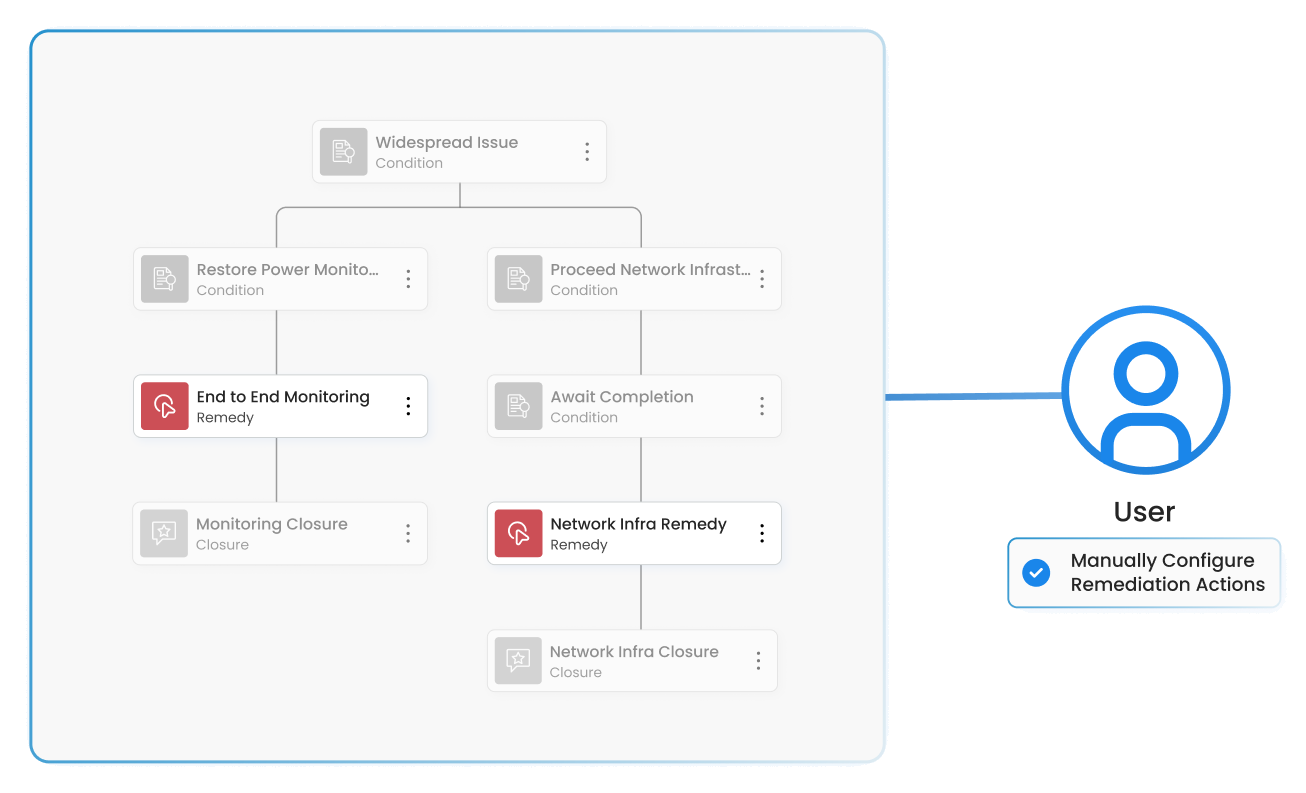
Closure Feedback
After the configured remediation actions are triggered, Sherlock waits for the closure feedback from these actions, marking the problem as "solved" if successful or "not solved" if it encounters a failure.
This dynamic process not only resolves problems promptly but also provides a clear track record of the total problems, problems solved, and those that require improvement.
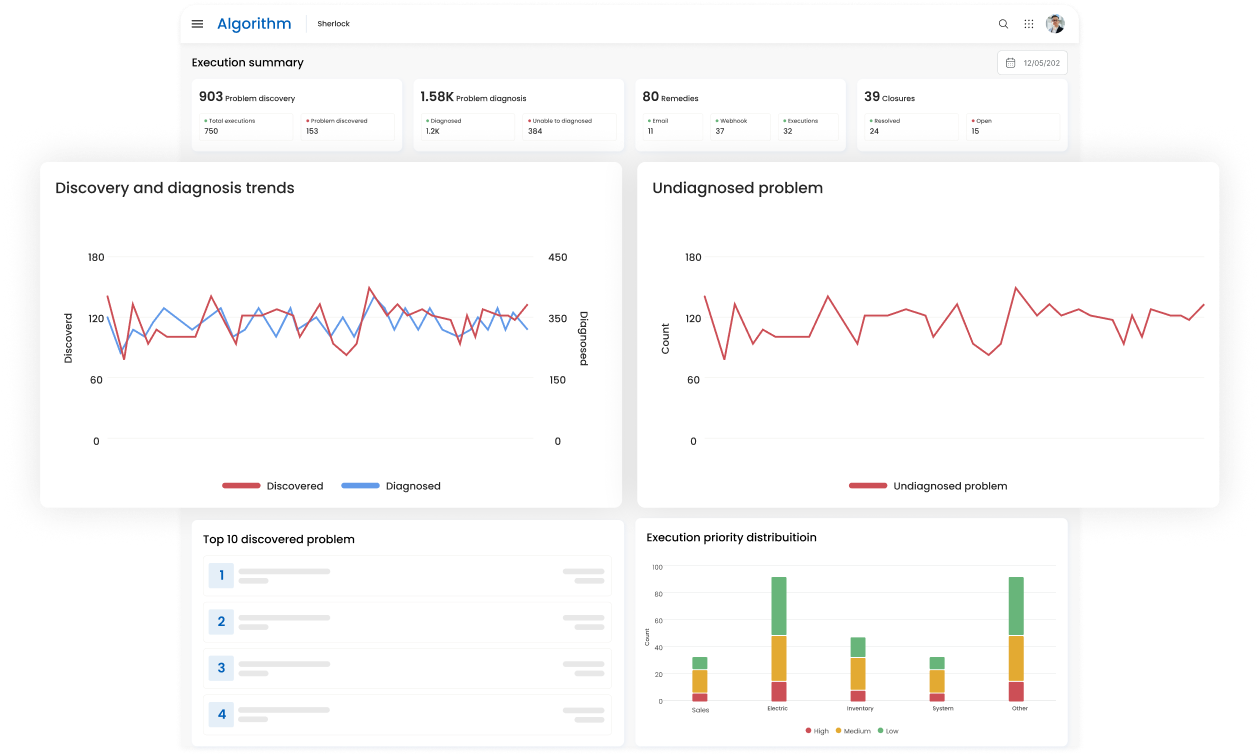
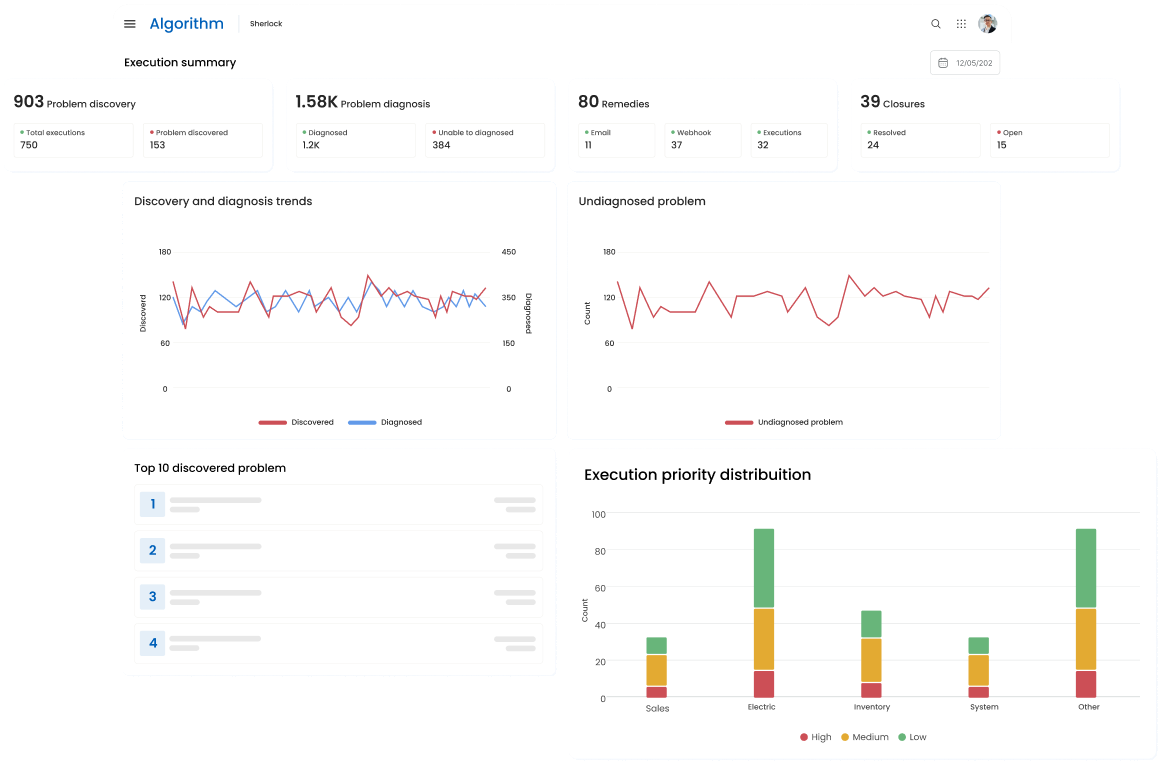
RCA flow monitoring
You can watch the RCA flows themselves: which ones found a cause, which path they took to get there, and which ones ran to the end without concluding anything.
That last group is the useful one. It shows you exactly where the decision tree is missing a branch, and that is how the next incident gets diagnosed faster than this one.
Works with the rest of the platform.
Automate the operational work nobody wants to own. Event and schedule-driven workflows with conditional logic, action blocks, and first-class integration with external systems.
Read moreLive pipeline health, SLA tracking, and failure-pattern analysis in one operational view, with AI recommendations on what to fix before it becomes an incident.
Read moreMove data in at any cadence: scheduled batch, on demand, or change data capture that streams every insert and update as it happens.
Read moreBring us your last bad incident.
See Sherlock run decision-tree RCA on your own operations, trigger remedies, and close the loop, live, on your stack.